


By Jennifer Fernandez
RALEIGH — A statewide group that has focused on improving the health of mothers and babies since 2009 has been winding down its work since it lost state funding last October.
Work has been going on behind the scenes, however, to get that funding restored, legislators said last week.
“Marty [McCaffrey] and I are probably equally angry about this,” Rep. Grant Campbell (R-Kannapolis) said of the funding cut after hearing an update from Martin McCaffrey, a pediatrician and neonatologist and the director of the Perinatal Quality Collaborative of North Carolina.
“I’ve asked about half a dozen times for [the funding’s] reinstatement,” said Campbell, a longtime OB-GYN, at the Feb. 25 North Carolina Child Fatality Task Force meeting. “Just as an update … we’re going to start transitioning to demanding.”
Sen. Jim Burgin (R-Angier) said he also has been speaking with government officials about restoring the funding.
“We’re all for it,” he said. “We ought to even do more for it.”
The task force, which plans to send its 2026 recommendations to the General Assembly around the end of April, voted to support recurring annual funding of $905,000 for the collaborative. That would restore the group’s yearly budget, which most recently has been connected to Medicaid funding.
Maternal and newborn focus
The Perinatal Quality Collaborative, a network of teams across the state, has improved infant care and prevented infant deaths through various initiatives since 2009, McCaffrey said.
Every year the collaborative supports maternal and newborn initiatives in as many as 60 of the state’s more than 115 hospitals.
One project on substance use disorder for mothers and their babies improved screening to ensure care for those who need it, McCaffrey told the Child Fatality Task Force, a legislative study group of volunteer experts, state agency leaders, community leaders and state legislators who research child health issues. The task force then makes policy and spending recommendations to the General Assembly.
“People were screening moms based on what they thought the moms looked like and whether they would be people who would use drugs,” said McCaffrey, who is also on the task force. Now, standard protocol is to obtain verbal validation of drug use status from every new mom.
The collaborative also converted the state to Eat, Sleep and Console, an alternative practice for treating babies who are drug addicted or at risk of withdrawal.
When the project started, standard protocol was to put the newborns on morphine, which created prolonged hospital stays, he said.
“What does the baby need to do?” McCaffrey said. “It needs to be able to eat, sleep and console. If you can do those things, you don’t need drugs.”
That project helped shorten hospital stays for affected newborns, saving $4.5 million annually over the three-year project, he said.
When the collaborative’s funding was cut last year, McCaffrey wrote a memo outlining the group’s work over the years. He included estimates on how much the General Assembly had spent — $10.6 million — and how much the initiatives saved the state — $98 million — that would have been spent on treatment and longer hospital stays, for example. Based on that cost avoidance, the return on investment for North Carolina is about 925 percent, he said.
Yet, there is more work to do.
North Carolina ranks near the bottom of states when it comes to infant mortality, reporting 6.9 deaths per 1,000 live births in 2023. The U.S. average infant mortality rate was 5.6 deaths per 1,000 live births that year. The state with the lowest rate is New Hampshire, with only 2.93 infant deaths per 1,000 live births. If North Carolina’s infant mortality rate was the same as New Hampshire’s, 480 more babies would survive their first year in this state.
Meanwhile, 18.6 percent of North Carolina mothers get inadequate prenatal care, according to the latest March of Dimes report that looks at how the U.S. is handling maternal and infant health. The national average is 16.1 percent.
Only 72.3 percent of mothers in North Carolina start prenatal care in the first trimester, compared with 75.5 percent of U.S. moms.
Caught in Medicaid fight
“Our four-year contract with DHHS [state Department of Health and Human Services], which had two years left on it, was very abruptly terminated in the middle of projects that we were developing. I’m angry about that still,” McCaffrey told the Child Fatality Task Force.
“What we were told by Medicaid, it was clear this was a budget cut across the board. It wasn’t anything about us,” he said. “The quote was, ‘This is not about your performance. This was about funding availability or the lack thereof.’”
Campbell blamed it on politics.
The state’s Republican-led General Assembly and Democratic Gov. Josh Stein have been at odds over what the state pays for Medicaid, including the Medicaid Managed Care Oversight Fund. The “mini-budget” lawmakers passed in June 2025 had less money than NC DHHS requested, which led the department to cut Medicaid reimbursement rates for health care providers and slash programs such as the Healthy Opportunities Pilot and the Perinatal Quality Collaborative.
In an October email to NC Health news, an NC DHHS spokeswoman attributed the perinatal group’s funding cut to “the $33M underfunding of the Medicaid Oversight Fund by the NC General Assembly.”
The reimbursement rates were later restored, but the perinatal group’s funding was not.
The collaborative hasn’t always been funded through Medicaid. It was originally a line item in the state budget, McCaffrey has told NC Health news.
Other states have found ways to pay for their perinatal quality collaboratives, including grant money and assessing annual fees on hospitals that participate, he said.
McCaffrey said North Carolina could look at those options if Medicaid funding is no longer feasible.
Federal lawmakers’ cuts to Medicaid in the One Big Beautiful Bill stripped hundreds of millions in funding from rural hospitals’ Medicaid reimbursement over the coming decade. To make up for some of the cuts and target improved health outcomes in rural communities, Congress created a $50 billion rural health fund.
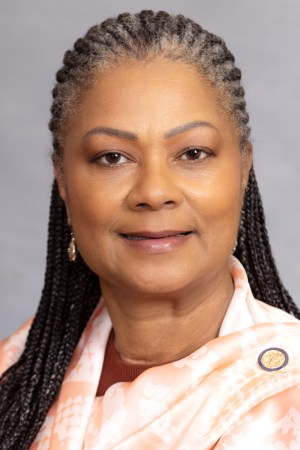
Rep. Carla Cunningham (D-Charlotte) suggested using some of the $213 million of that rural health care funding flowing to North Carolina this year as a result. It is the first tranche of a total $1 billion the state will receive over five years from the fund.
Sarah Verbiest, co-chair of the Child Fatality Task Force’s perinatal health committee, reminded the task force that North Carolina pioneered the Perinatal Quality Collaborative, which other states copied.
McCaffrey said North Carolina needs the collaborative.
“If we don’t have this organization, we will be the only state without a perinatal quality collaborative,” he said. “So I hope that we will find a way to let our work continue.”
This <a target=”_blank” href=”https://www.northcarolinahealthnews.org/2026/03/03/perinatal-quality-collaborative-funding-medicaid/”>article</a> first appeared on <a target=”_blank” href=”https://www.northcarolinahealthnews.org”>North Carolina Health news</a> and is republished here under a <a target=”_blank” href=”https://creativecommons.org/licenses/by-nd/4.0/”>Creative Commons Attribution-NoDerivatives 4.0 International License</a>.<img src=”https://i0.wp.com/www.northcarolinahealthnews.org/wp-content/uploads/2021/10/cropped-favicon02.jpg?fit=150%2C150&ssl=1″ style=”width:1em;height:1em;margin-left:10px;”>
<img id=”republication-tracker-tool-source” src=”https://www.northcarolinahealthnews.org/?republication-pixel=true&post=66430″ style=”width:1px;height:1px;”><script> PARSELY = { autotrack: false, onload: function() { PARSELY.beacon.trackPageView({ url: “https://www.northcarolinahealthnews.org/2026/03/03/perinatal-quality-collaborative-funding-medicaid/”, urlref: window.location.href }); } } </script> <script id=”parsely-cfg” src=”//cdn.parsely.com/keys/northcarolinahealthnews.org/p.js”></script>
